Shine a Light:
understanding the importance of community in charity
Engaging volunteers for events.
Lung Foundation Australia were seeking to use their inaugural "Shine a Light" walk to create a new framework for this, with future events building upon this foundation.
"Shine a Light" represents a core part of Lung Foundation Australia's 2030 objectives.
Shine a Light was inspired by a community member, who holds their own Shine a Light walk every year in their town. Lung Foundation Australia hopes to bring this event across the nation, with the aim of raising awareness around the stigmas and causes of lung cancer.
We wanted to understand the motivations and needs of the volunteer community. Our goals were to discover:
- What motivated people to volunteer?
- What made people continue volunteering?
- How did volunteers find out about the causes they were involved in?
We also wanted to gather alternative points of view. To achieve this, we interviewed Lung Foundation Australia staff to learn their perspectives on their work, and the initiatives they'd taken to connect with their community.
- Successful fundraising events had a strong support network in place.
- Volunteers look for a sense of community, and of feeling acknowledged.
- Word of mouth was the strongest way of finding out about causes.
- Our client's assumptions were validated: stigmas around lung disease and cancer affected awareness of Lung Foundation Australia.
- While under-resourced, Lung Foundation Australia still tried to support their community to the best of their ability, and are passionate about helping those who reach out.
- The community felt frustrated by a lack of promotion and communication around their own self-initiated fundraising, a sentiment echoed across surveys and conversations.
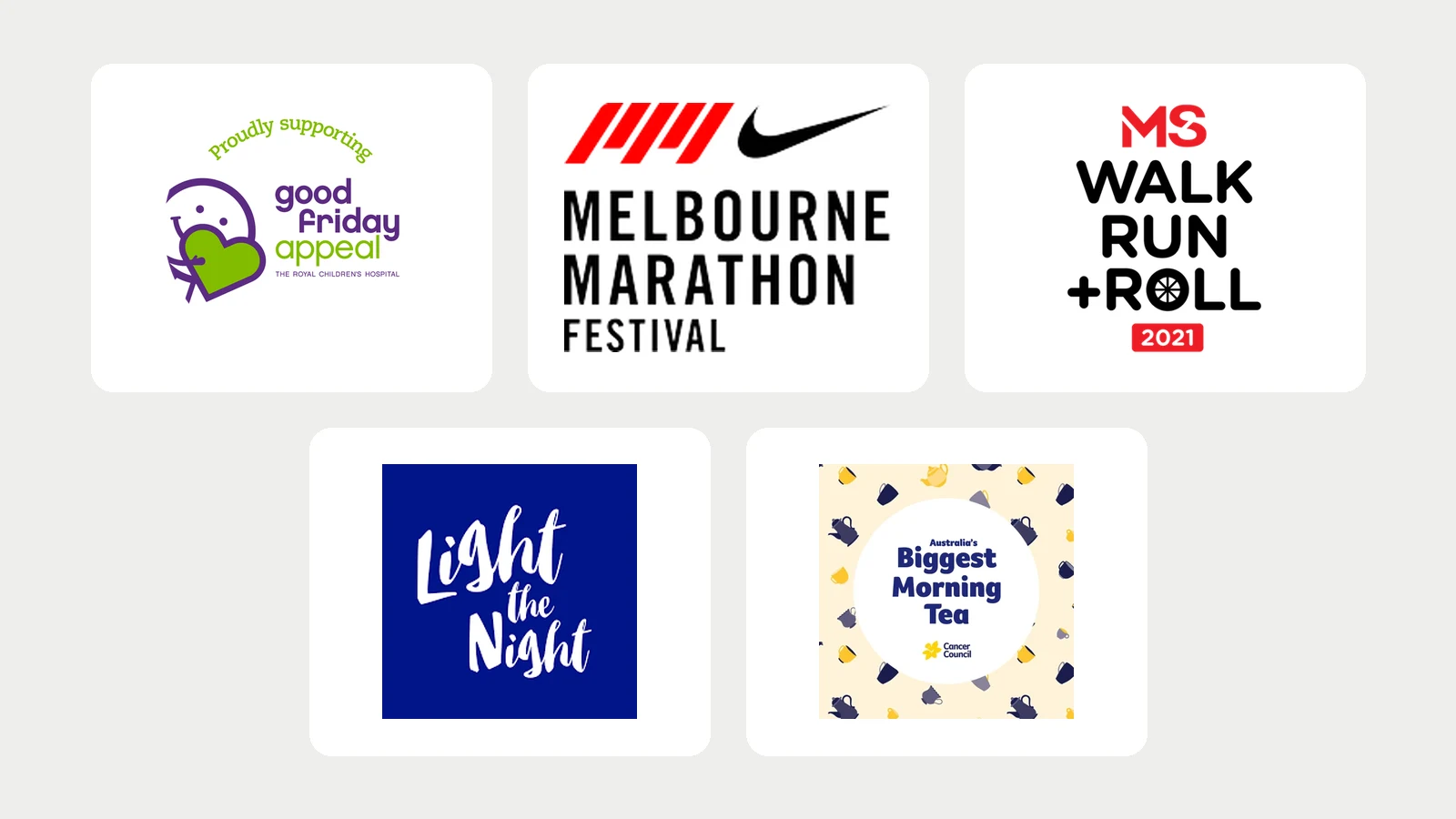 Market research: community fundraising events we analysed, from the Good Friday Appeal to Australia’s Biggest Morning Tea.
Lung Foundation Australia and their community weren't on the same page.
If we think of the struggle to draw volunteers as the symptom, then this disconnect between organisation and community is the root cause.
Sharing our findings with Lung Foundation Australia.
We took the organisation on a journey (map) with us…
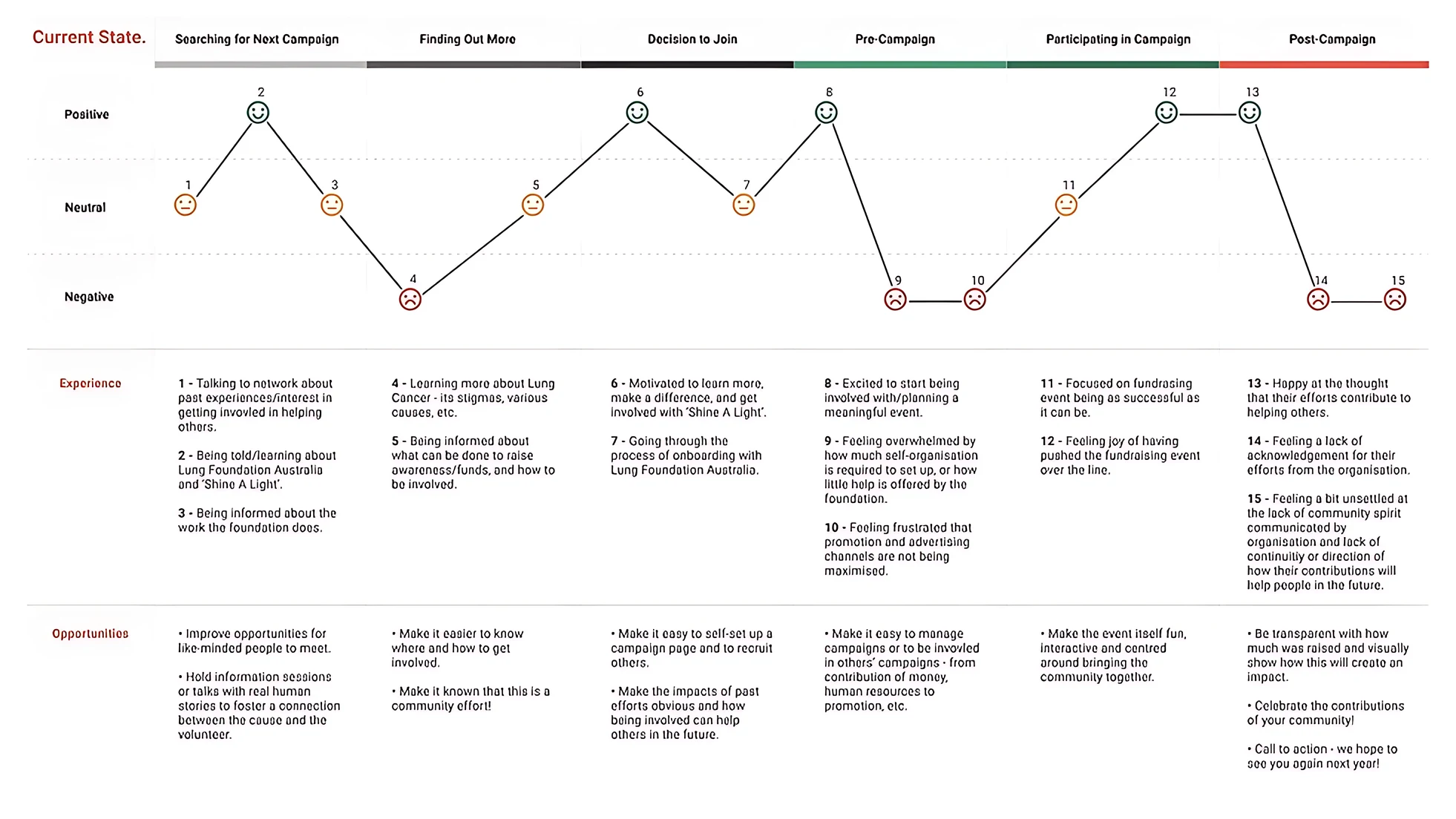 Current state: campaigners felt overwhelmed setting up, and unacknowledged once the event was over.
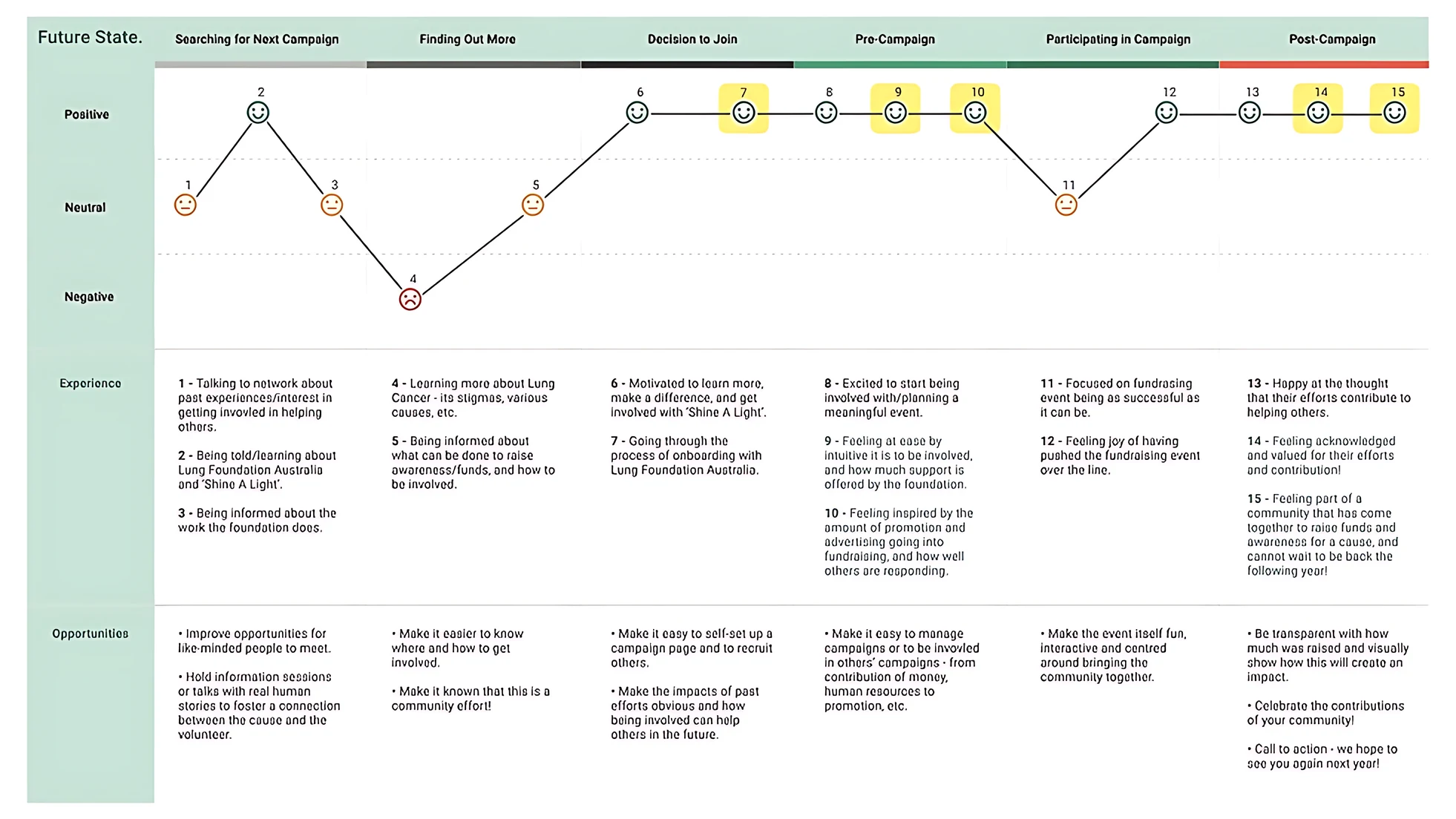 Future state: with the right support, the journey stays positive from sign-up to celebration.
…helped them understand the members of their community to focus on first…
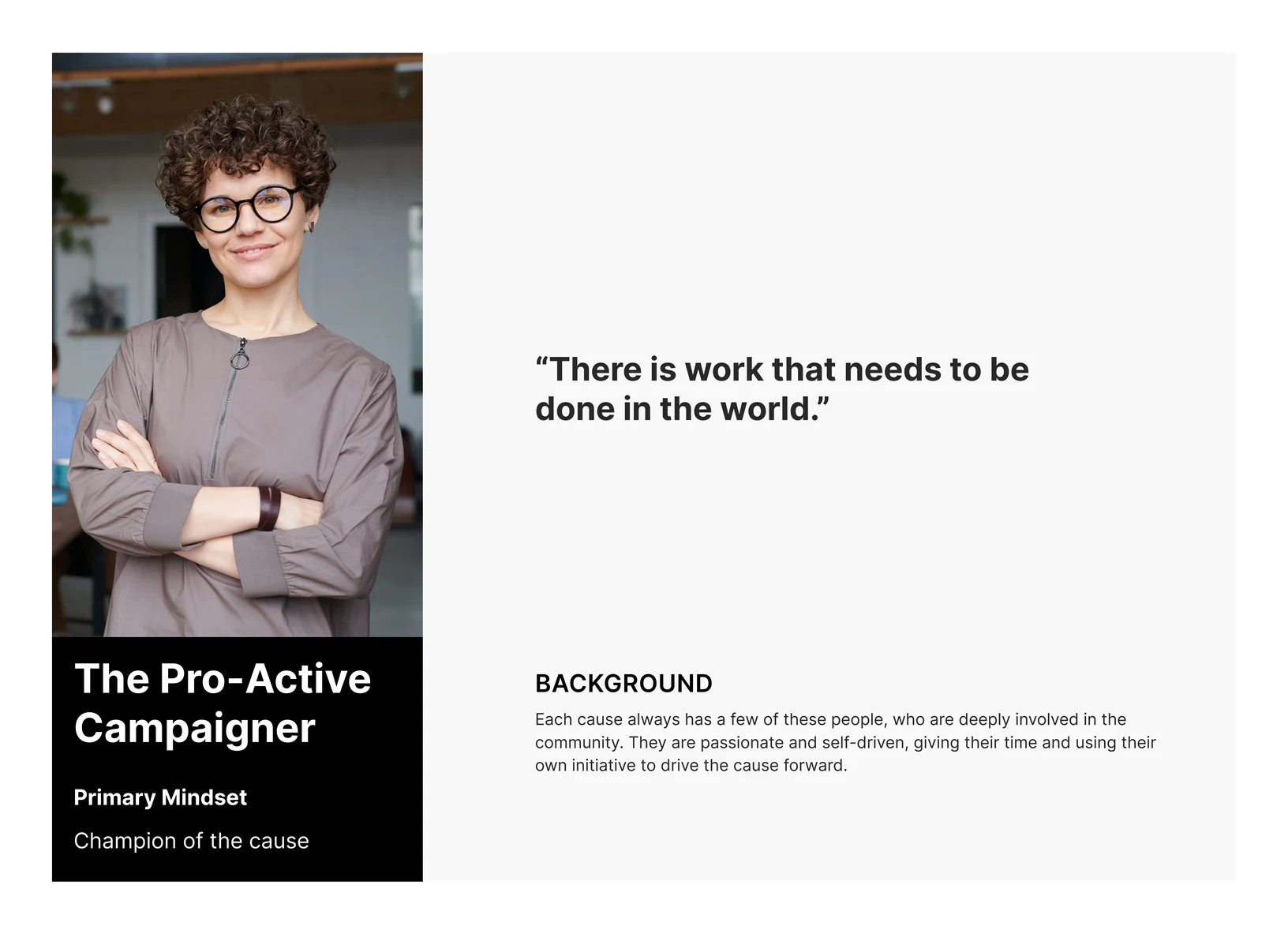 The Pro-Active Campaigner: passionate, self-driven community members who use their own initiative to drive the cause forward.
…and showed them the path forward, for the organisation to walk hand in hand with its community.
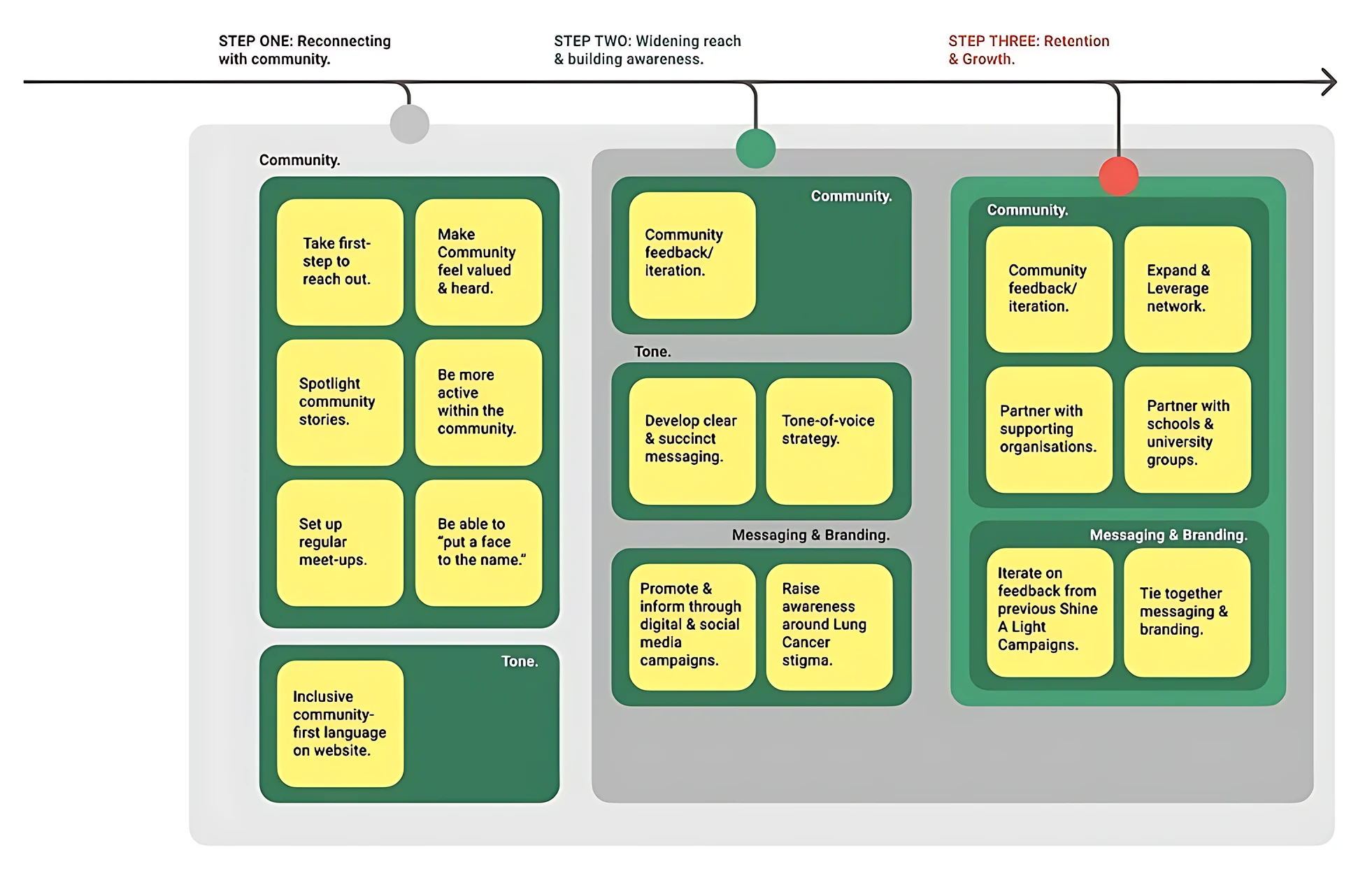 The roadmap: reconnect with the community, widen reach and awareness, then focus on retention and growth.
Communication is vitally important.
Whether in a design sense, in working relationships, or on a deeper level between organisation and community, communication builds bridges.
We do our best work when we work together. None of this would have been possible without the great working relationship I shared with my peers. Shoutout to Junhan, Kelvin and Joe for always keeping great lines of communication, helping each other out when we needed it, and not being afraid to discuss our individual points of view.